What Tai Chi really trains
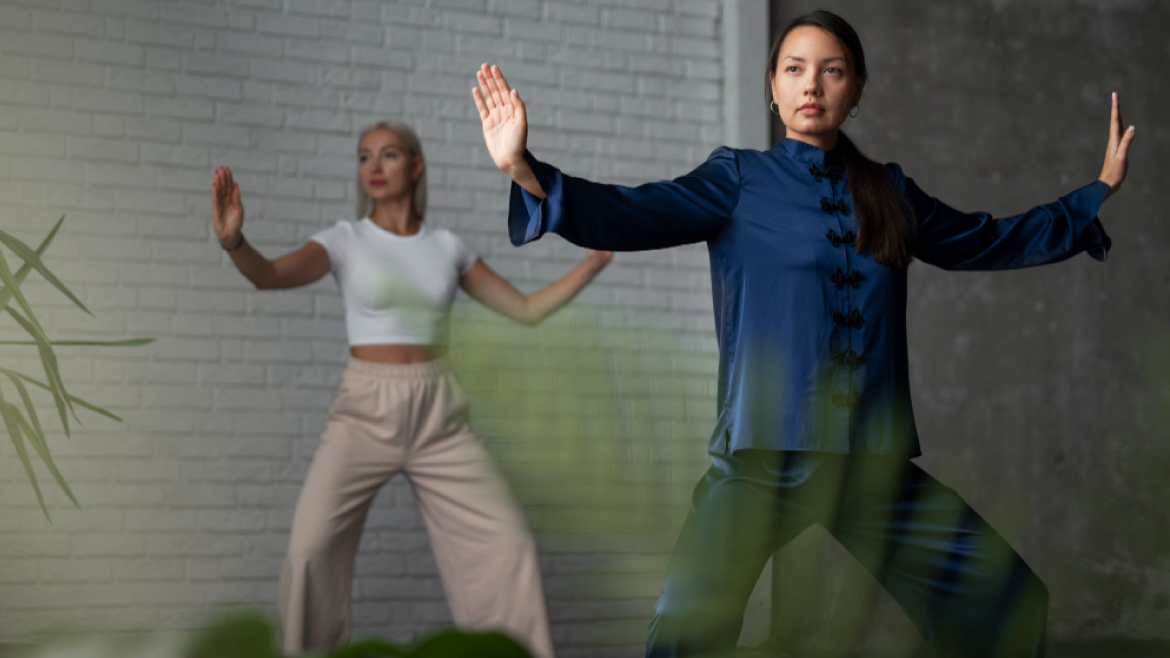
Tai Chi looks like slow motion, but it trains something fast-moving: your nervous system. Small, continuous shifts in weight and spirals through the hips (“kua”) teach your body to respond instead of react. Over time, that response becomes your baseline—even off the practice floor.
Benefits at a glance
- Mental: Sharper focus, less mental “static,” improved working attention.
- Physical: Joint-friendly strength, better balance and gait, postural integrity.
- Emotional: Lower stress reactivity, steadier moods, greater patience.
- Spiritual: A tangible sense of presence; breath, intention, and motion align.
The studio difference (subtle, but powerful)
In a space like MindfulSpace4u, Tai Chi is curated more like a moving clinic than a choreography class:
- Visual learning: Watching the instructor’s timing and weight shift is half the lesson.
- Hands-off cues that land: Simple phrases—“soften the knees,” “pour weight,” “float, sink, swallow, spit”—unlock ease without strain.
- Shared cadence: Practising in unison gently entrains breath and rhythm; balance improves faster than solo practice.
- Props & pacing: Chairs or a barre can support confidence while you build stability.
What to notice in your next guided session
- Rooting: Are all four corners of each foot alive on the floor?
- Soft strength: Are the shoulders quiet while the legs do the work?
- Dantian-led movement: Do transitions begin from the lower belly rather than the hands?
- Unbroken circles: Do your movements feel like water—no hard edges, no rush?
A mini glossary you’ll hear in class
- Dantian: Energetic “center” below the navel that organizes movement.
- Peng: Springy, buoyant quality—soft but supported.
- Cloud Hands / Brush Knee: Common patterns you’ll meet early on.
Between-session micro-practices (under a minute each)
- Three breaths, soft knees: Exhale longer than you inhale; let the tailbone drop.
- Weight pour: Shift slowly left–right without lifting the feet; keep the crown floating up.
- Palming the eyes: Warm the hands and cup them over closed eyes for 20 seconds.
Ease-first note: Pain is never a teacher in Tai Chi. If a movement bites, shorten your stance and soften.