
In a world that celebrates movement, achievement and productivity, perhaps one of the most powerful things we can learn is how to be still.
There is a peculiar contradiction in modern living. We have developed countless technologies to make life easier, faster and more convenient, yet somehow, we have never felt more pressed for time.
Our schedules are full, our minds are occupied, and even our moments of rest are often interrupted by the need to do something. We measure progress through activity and achievement, rarely considering that some of life’s most profound transformations happen when we stop pushing.
This is where Yin Yoga offers something extraordinary: an invitation to experience the power of slowing down.
The Quiet Philosophy of Yin Yoga
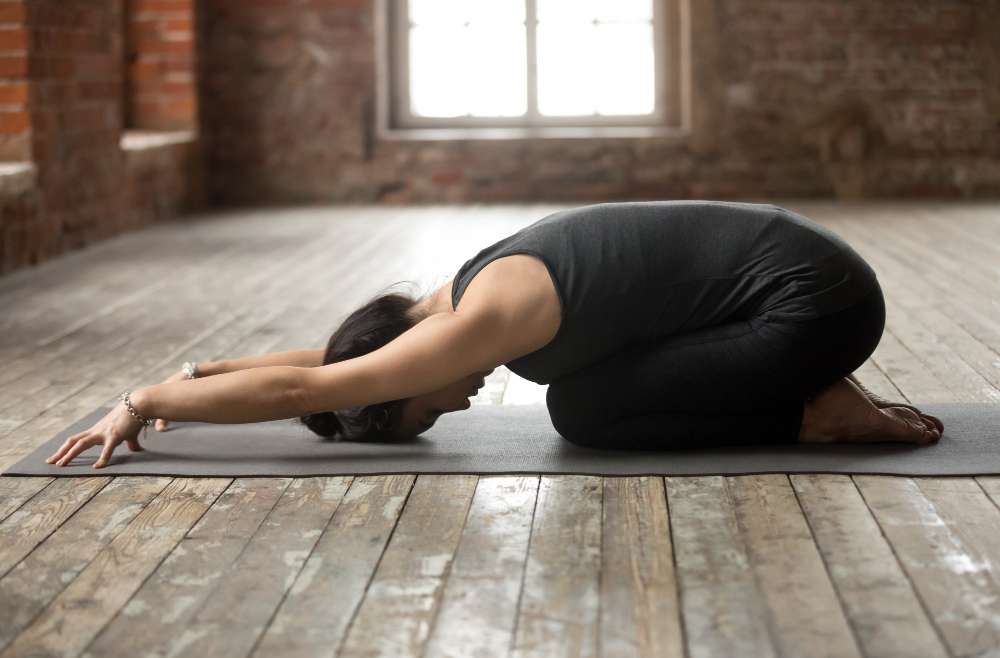
Unlike more dynamic forms of yoga, Yin Yoga invites practitioners to settle into largely floor-based postures and remain there for several minutes, often between three and five. The approach is deliberately unhurried. Muscles are encouraged to soften rather than actively contract, allowing gentle, sustained stress to be applied to tissues around the joints, including fascia. But there is something equally important happening beyond the physical body.
As movement decreases, awareness increases.
You begin noticing subtle sensations that ordinarily disappear beneath the noise of everyday activity. The rhythm of your breathing becomes more apparent. Thoughts emerge and pass. Areas of physical resistance reveal themselves, offering opportunities to respond with patience rather than force. Yin Yoga is not simply about stretching further. It is about learning how to remain present without constantly needing to change what you experience.
The Physical Benefits: Strength Through Softness
Yin Yoga approaches mobility differently from vigorous exercise. Rather than relying on repetitive movements or muscular exertion, it uses supported, sustained positions to explore comfortable ranges of motion.
With regular practice, it may help:
- Maintain or improve flexibility and joint mobility.
- Develop greater awareness of posture and physical tension.
- Complement more dynamic activities by introducing slower movement.
- Encourage relaxation and a more comfortable relationship with the body.
Importantly, deeper is not necessarily better. Sensations should remain manageable, and practitioners should avoid forcing joints or stretching into pain. The value lies in patient, appropriate movement, not in achieving the most dramatic pose.
The Mental Benefits: Giving the Mind Permission to Settle
The human mind is remarkably capable of analysing, anticipating and solving problems. But it is equally capable of exhausting itself. When our attention is constantly directed towards responsibilities and future outcomes, the mind can become accustomed to operating in a state of perpetual urgency.
Yin Yoga creates an intentional interruption.
Holding a posture for several minutes encourages us to notice thoughts without immediately acting upon them. Instead of chasing every concern, we gradually learn to recognise that thoughts are events in the mind, not instructions that must always be followed.
This practice can strengthen patience, encourage concentration and create opportunities for mental relaxation.
Stillness does not necessarily silence the mind. It changes the way we listen to it.
The Emotional Benefits: Making Peace with Discomfort
One of Yin Yoga’s most meaningful lessons concerns our relationship with discomfort. In everyday life, we often respond to difficult feelings through avoidance, distraction or resistance. A gentle Yin practice offers another possibility. When a posture feels challenging, the aim is not to endure pain or suppress emotion. Instead, the practitioner can soften, adjust the position, notice the breath and explore whether the sensation changes.
This becomes a useful metaphor for emotional life.
We cannot always eliminate uncertainty, disappointment or frustration. We can, however, develop healthier ways of responding to them. Over time, mindfulness practices may support emotional awareness and a greater capacity to tolerate ordinary discomfort without becoming overwhelmed.
The Spiritual Dimension: The Wisdom of Surrender
Within the philosophical traditions associated with Yin Yoga, stillness can become a pathway towards deeper self-understanding. Surrender, in this context, is not defeat. It is the conscious decision to release unnecessary resistance.
We surrender the need to perform, the desire to compare ourselves with others, and the belief that every meaningful experience must produce an immediate result. For some, this becomes a spiritual practice of self-acceptance, gratitude and connection. For others, it is a quiet opportunity to reflect on their values and relationship with the world. Both experiences are meaningful.
The Beauty of Being Guide
There is something particularly reassuring about entering a peaceful studio where nothing needs to be accomplished beyond simply being present. In a thoughtfully guided Yin class, the instructor helps participants explore suitable postures, use supports where necessary and distinguish healthy sensations from strain. The environment itself becomes part of the experience.
There is no pressure to compete, no expectation to demonstrate flexibility and no need to arrive with an already peaceful mind. The practice meets you where you are.
A Thought to Carry Beyond the Mat
We often associate growth with adding more: more effort, more knowledge, more experiences and more achievements. Yet growth sometimes begins with subtraction. Less rushing. Less resistance. Less unnecessary pressure. Yin Yoga reminds us that balance is not created by constant movement alone. Sometimes, the most meaningful progress begins when we become still enough to recognise what truly matters.
Perhaps the art of living well is not only knowing when to move forward, but also understanding when to pause.
MindfulSpace4u Reflection: What might change in your life if you began treating rest and stillness as essential parts of growth rather than interruptions to it?